
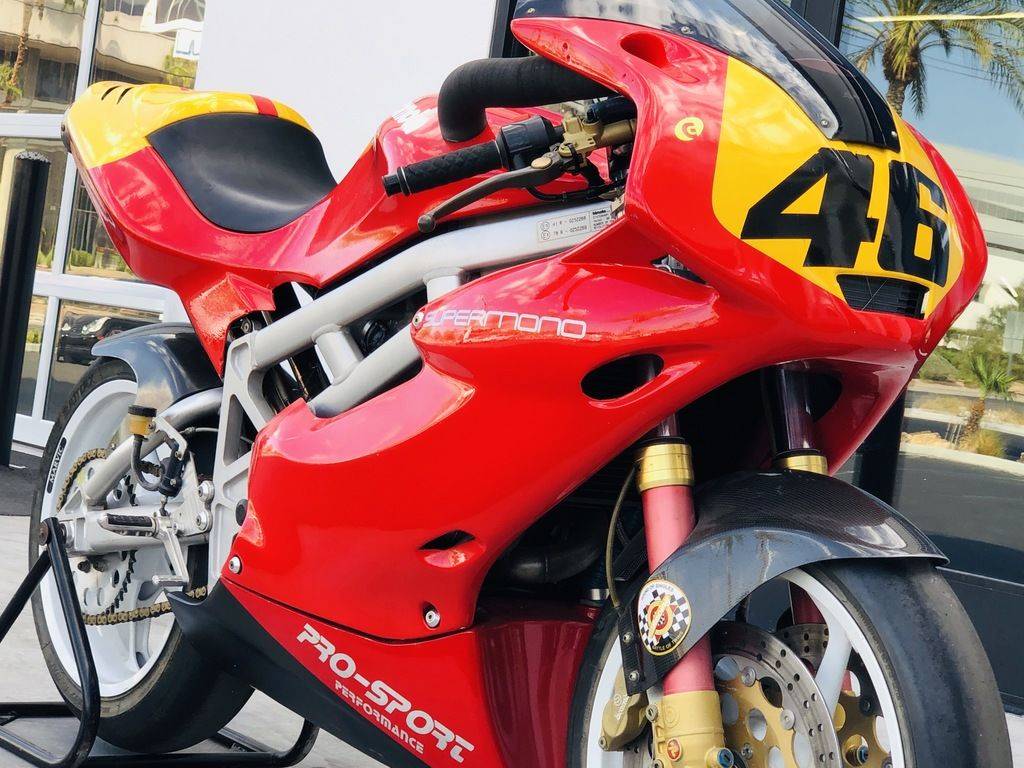
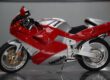
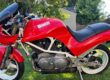
1995 Bimota BB1 Supermono
Miles: 500
No Title, sold on Bill of Sale
Dealer: Eurocycle in Vegas
$18,995
SELLER
Bimota’s BB1 Supermono first appeared at the 1994 Cologne Motor Show and was the boutique brand’s first-ever model powered by a single-cylinder engine. The BB1 (or Bimota BMW 1) was also the Rimini firm’s first model to feature a powertrain from a BMW, though the liquid-cooled, 652cc, four-stroke single in the BB1 was actually produced by Austrian-outfit, Rotax.
Originally utilized by the Bavarian brand’s F650 “Funduro”, the big thumper was paired with a 33mm Mikuni BST carb and a custom GP-inspired exhaust system terminating in a pair of underseat mufflers. The BB1 put down 48hp at 6,500 rpm and 42.7 ft-lbs of torque at 6,000 rpm, which was enough to propel the sub-400 lb model to a top speed of around 100 mph.
The BB1 Supermono was originally created by the small marque to compete in the ‘90s Italian Supermono Championship, alongside the likes of Ducati’s legendary Supermono. The race-sped BB1 used a 725cc version of the production model’s engine that was capable of delivering 75hp at 10,000rpm. Unfortunately Bimota couldn’t iron out the kinks in time, and the Rimini-made Rotax-powered single only went on to win a single race.
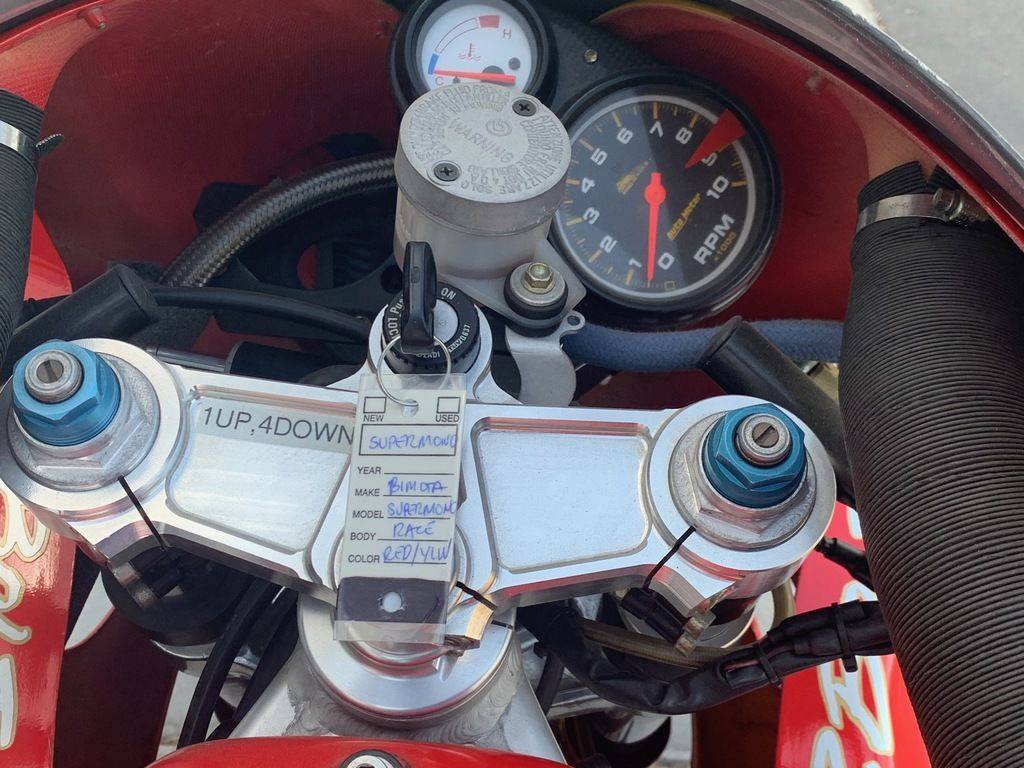
A big part of what made the Supermono so noteworthy was its top-shelf running gear and advanced chassis design. The single was constructed around an oval-section aluminum alloy tube frame and swing-arm — both of which were derived from the firm’s Mantra model — married to a 43mm Paioli fork and rear shock. The bike also got forged Marchesini rims and a single 320mm disc and four-pot Brembo caliper, though a second front disc was offered as a factory add-on.
The BB1 was dressed in unmistakably ‘90s Italian bodywork. The model’s fuel-cell was actually housed in the belly-pan under the Rotax mill, resulting in a very low center of gravity. A faux tank cover up top actually sports a nifty little glove compartment, while providing leverage in the corners. Other trick little accouterments included carbon fiber fenders and instrument housing, and front turn signals integrated into the back of the mirrors — a feature that more-than-a-decade-later became a staple on sport bikes.
In Giorgio Sarti’s book, Bimota, 25 Years of Excellence (Giorgio Nada Editori, 1999), he explains that the Supermono was well-received in Germany and Japan, though the rest of the global market showed little enthusiasm for the BB1 upon its release. This, compounded with the relatively minute number of units produced, makes BB1 specimens incredibly rare today, especially on American shores.
With extremely light weight and potent and punchy one-cylinder engines, Super-singles are some of the most enjoyable, characterful, and grin-inducing track day toys in existence. While there are a myriad of aftermarket kits to turn 450cc motocross bikes into lightweight road-racers, none of them carry the pedigree, prestige, or the overall exotic appeal afforded by factory-made Italian supermonos.
RSBFS
We’ve seen this one before. Tad covered this exact BB1 back in 2023 when it was listed on eBay, and the comment section turned into a whole thing. The previous owner, Paul Murphy, showed up to tell the story.
It’s moved from eBay to Craigslist at the same $18,995. Make of that what you will. In this niche, the right buyer sometimes takes a few years to show up. That’s not a red flag. It’s just the math on a 524-unit bike.
One thing worth noting: it’s a bill of sale only, no title. That’s not a dealbreaker on a track-only machine, but know what you’re getting into before you fall in love with the idea of riding it to work.
If you want the full model breakdown, Tad’s got you covered in the original post.
Would you take it to the track, or is this one strictly for the display case?
Good luck to the buyer and seller!

Tuning firm in Germany Turbocharged this engine. It was Bonkers fast.
Someone needs to get slapped for putting that rear brake reservoir there.
i would like to ride the bike out of utter curiosity about that gas tank. IMO that bike would be far more agile changing directions by raising the center of mass and placing it allong the roll center for a lower moment of inertia. Putting 25 lbs of weight in the belly pan will help antiwheelie, no doubt. But the bike isn’t a wheelie monster needing to be tamed. It needs to change direction quickly through its roll axis. Swinging a heavier belly pan left and right in a switchback isn’t that at all.
Not saying it doesn’t work. Just saying, making it better is best served with a more humble design.