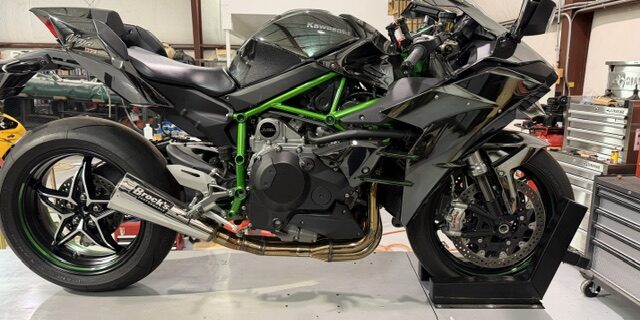
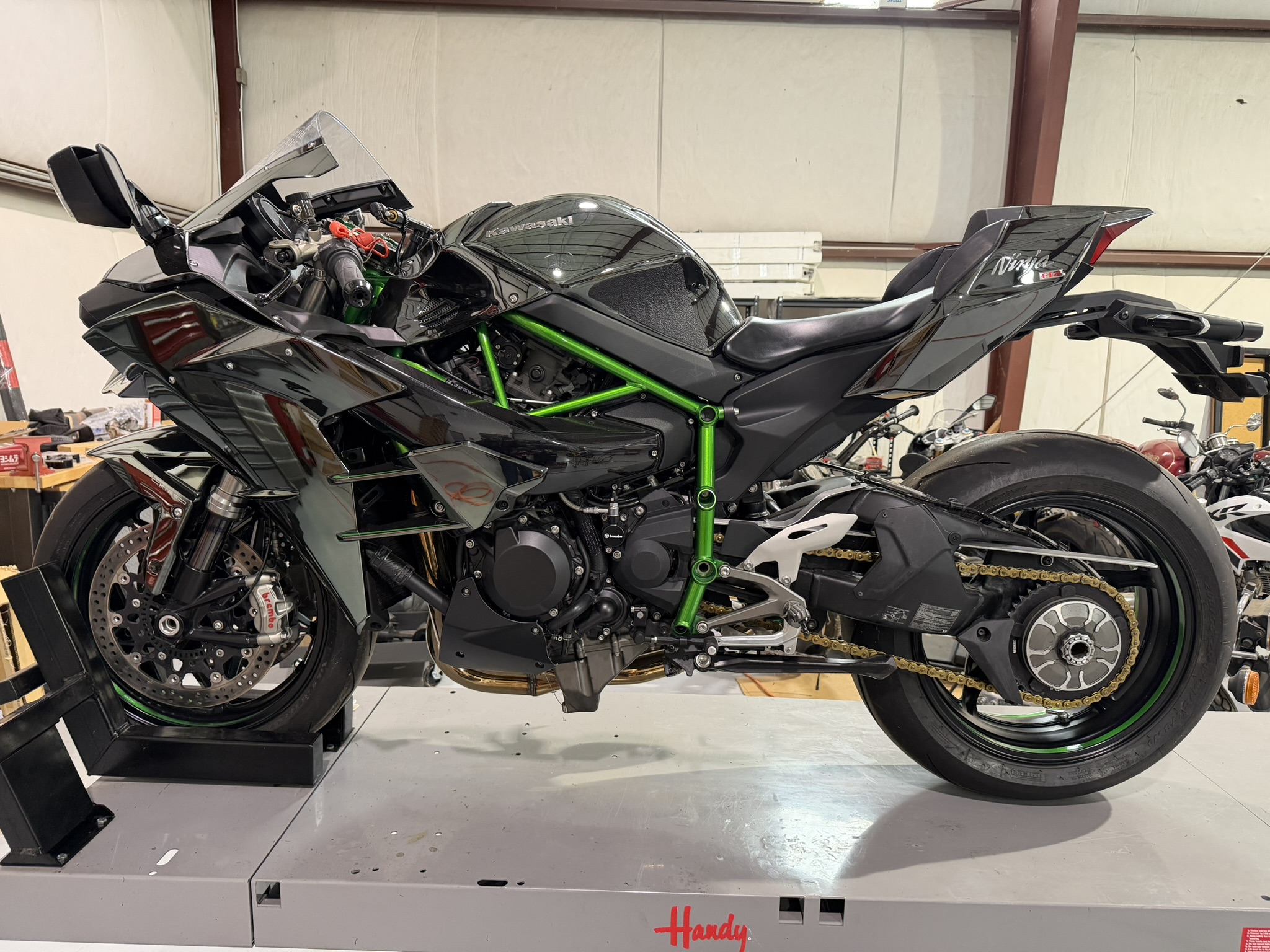
2015 Kawasaki H2
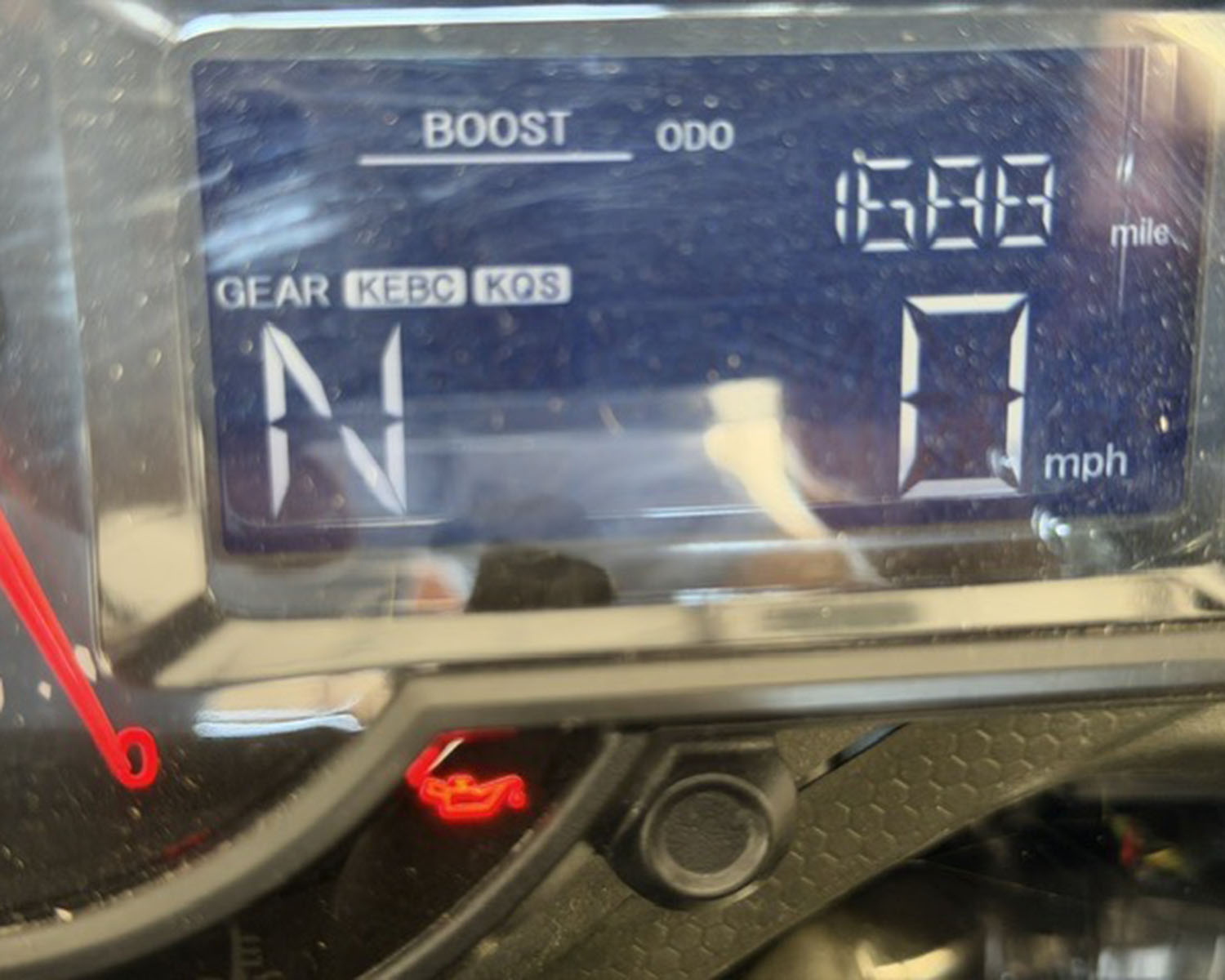
Miles: 1,688
Original Owner
Clean Colorado Title
Asking Price: $15,900
Contact: rjzahradnik [at] gmail.com
Sometimes, reviving a storied name or brand can be an ill-advised cash-grab, imagined by corporate executives to move some units by slapping some stickers on a a car or bike that’s a bit past its sell-by date. But that’s not the case with today’s Featured Listing, a 2015 Kawasaki Ninja H2. It differs a bit from the original 1970s machine, trading that bike’s famously terrifying on-off two-stroke power delivery for the even more terrifying always-on power delivery of the new model’s supercharged inline four, but the spirit is exactly the same, except this time there’s a twist: for the new H2, Kawasaki made the beast handle.
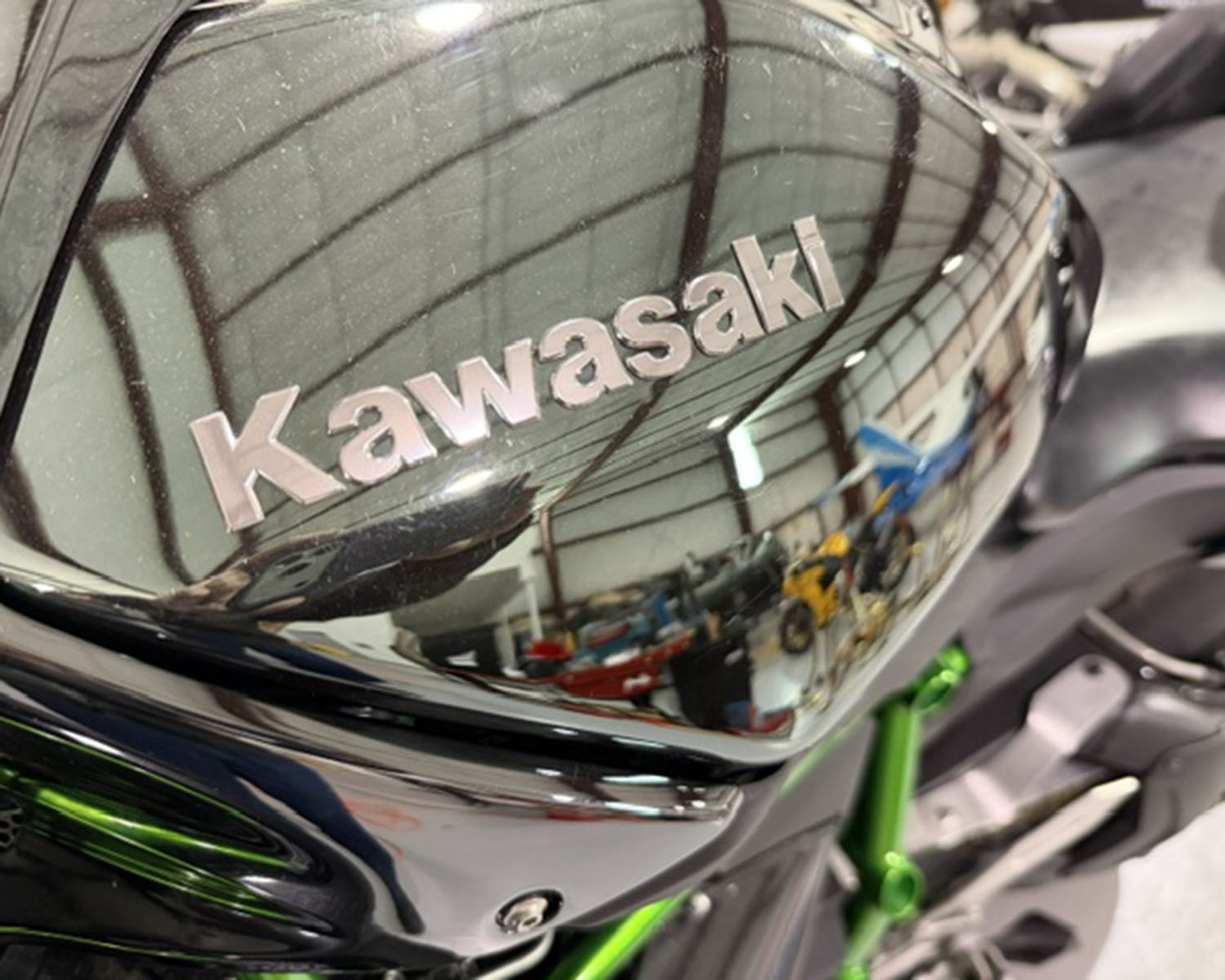
The biggest story, naturally, is the heart of the H2. The original bike was powered by a 748cc two-stroke triple that was very powerful, very smoky, and very thirsty. It also made the bike a bit of a handful when combined with that bike’s primitive suspension and weedy frame. With two-strokes out of fashion and a need for their new bike to make a real statement, Kawasaki turned to a long forgotten corner of motorcycle development, an evolutionary dead end: forced induction, in this particular case, supercharging. Earlier attempts at large scale production of forced-induction motorcycles in the 1980s had largely been a failure, due to the technological limitations of the time, and the resulting bikes were fun, but unnecessarily complex, laggy, and expensive. But modern electronics and Kawasaki’s desire to offer something truly different to a modern audience led to the creation of a brand new 998cc inline four that was originally offered in both roadgoing H2 and track-only H2R flavors. This was good news for H2 owners, as both versions of the bike were overbuilt to withstand the H2R’s 300hp output, and then detuned to the H2’s “mere” 200hp.
Much of the original H2’s “widowmanker” reputation was really earned by the earlier 500cc H1 bikes, but the H2 was never much of a corner carver either, given its handling limitations. The modern iteration of the H2 has no such issues. At 525lbs wet, it is a bit on the heavy side, compared to contemporary liter bikes, and on paper it may not seem to make much more power. But that supercharged midrange is absolutely massive, and you’ll probably be glad for the extra weight when the boost comes up. Handling of the Ninja H2 is excellent, with Kawasaki taking a page out of Ducati’s book, building the bike around a vivid green trellis frame, with beefy, fully-adjustable KYB suspension front and rear, and high-spec Brembo brakes to haul the whole thing down to a stop when the need arises. In a definite update from the original, the new H2 is fitted with a full suite of electronic rider aids, including traction control, launch control, ABS, and a quickshifter.
I would be astonished if a more powerful bike has ever been listed on this site. This 2015 H2 was set up to run in the standing mile races which were popular a few years back.
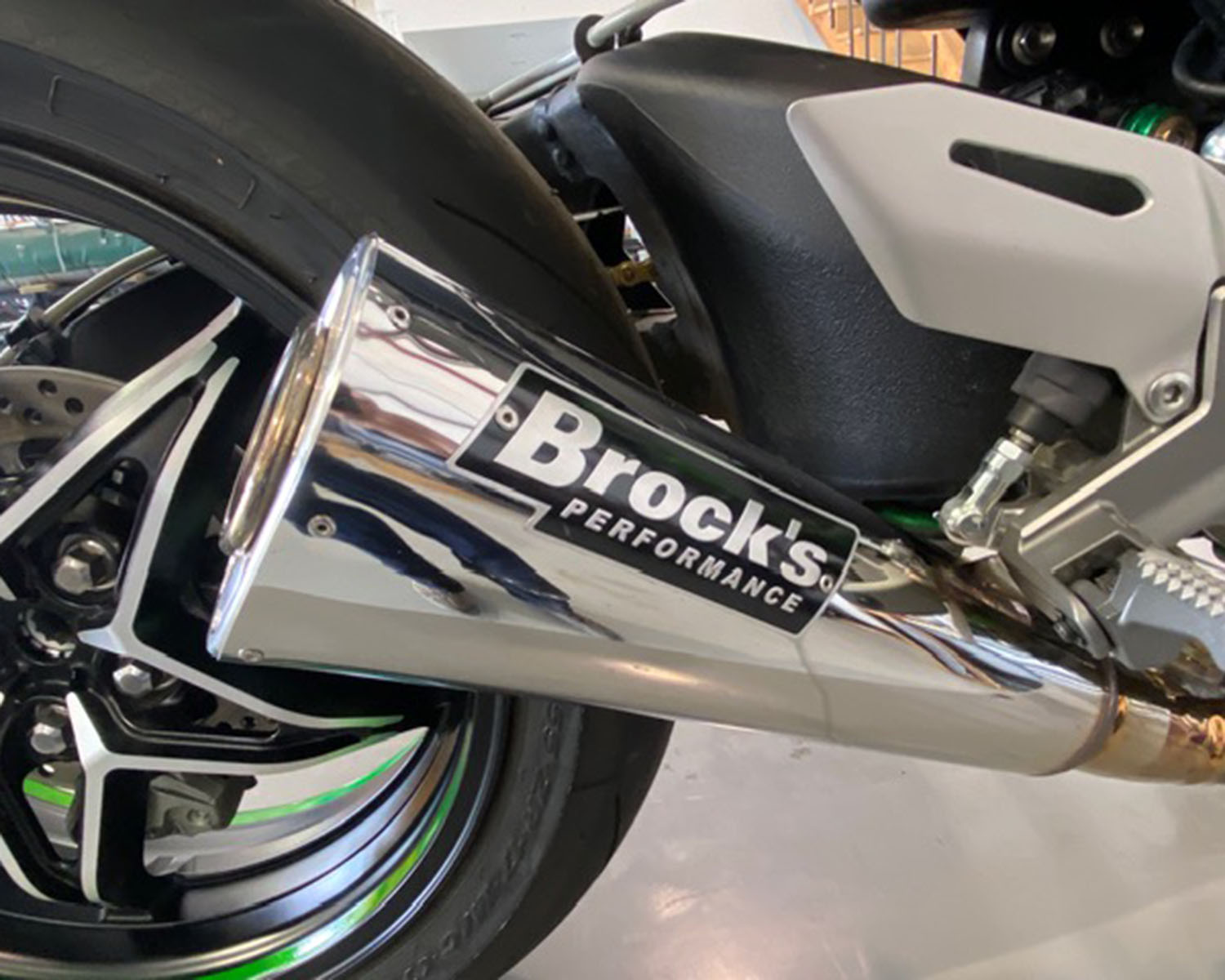
H2s with Brock performance parts were putting up ridiculous numbers like 221 mph in a standing mile, so I called them and they said they had a kit. I ordered the kit and an H2 and got them together. The result put up 220 hp at the rear wheel on a dyno on a hot day in Albuquerque (density altitude 9000+ feet). With transmission losses and altitude losses that figures out to 300+ hp at the crank at sea level.
I guarantee that twisting the throttle will convince you that’s true.
The beauty of this bike is that it avoids the usual problems of modified bikes. Usually, when you increase the power of a bike by 40% you introduce all kinds of problems. This bike is the exception. When ridden moderately it behaves like a stock H2. It’s a perfectly civilized Japanese four. It’s only when you get into it and get on the boost that the stars start turning into streaks. No turbo lag with the supercharger.
Why is this true? Remember, gas engines are basically air pumps. If you move 1.6 scfm (standard cubic feet per minute) of air and get anywhere close to the correct amount of gas mixed in, you’ll get 1 hp. Traditional engine modifications involve making the engine a better air pump and often involve major surgery to the engine which may reduce driveability and durability.
What’s different about this hotrod? Simply put, Kawasaki designed this engine to move the 500 or so scfm it takes to make 300+ hp and then strangled the engine with electronics so they could meet emissions requirements and sell it with a plate. The H2R, developed in parallel with the street bike, was allowed to breathe and make 300+ hp. You don’t need to make this engine a better air pump, you just need to set it free. Don’t think of it as a modification. Think of it as a liberation. Needless to say, it won’t pass an emission test.
So how did this work out? n 2016, at the age of 63, not as light as I used to be and with back problems that prevented a good tuck, I consistently ran 186 in the standing mile. The electronic launch control and wheelie control worked great and were absolutely necessary. One problem was that the wheelie control cuts out at 100 mph. The first time I made a full on run I found myself with a windshield full of blue sky as I crossed 100. Hit 125 before I got the wheel back down. It was very exciting as a unicycle.
I did this on a bike without wheelie bars or an extended swingarm because I wanted to do it on a true streetbike, not some drag queen.
This bike handles very well. I’ve been privileged to own and ride some of the best handling bikes ever built. This bike isn’t that far behind them. It’s not as flickable as my 675R Daytona (what is?). But if you’ve got the skill and experience to plan and execute your brake points and lines you can motor on demanding roads at quite a brisk pace. And then the straights, well….
I’ve enjoyed it on some of the finest mountain roads in America, and was never passed by anything.
Why so few miles? I carefully broke in according to the manual. Took it to the Denver mile, rode it on the street a few times and suffered the first of 3 back surgeries. Now, at 73, I’ve given up on riding it again and it’s for sale.
Always stored in a heated hangar in dry SW Colorado.
Buy it, throw away the 10 year old tires, change the oil, and go change Hayabusas into mirror specks.
Contact: rjzahradnik [at] gmail.com
After building their modern Ninja H2 monster motor and frame, Kawasaki made the bold choice to wrap it in the strikingly angular bodywork and dark mirror paint you see here. The finished machine isn’t conventionally beautiful, but it is extremely striking, and there’s no mistaking the bike’s murderous intent. These were built in small numbers each year of production, with a relatively high level of fit and finish, and were instant collectibles. This particular Kawasaki Ninja H2 has very low miles and has seen some tasteful performance modifications from well known supplier Brock’s that liberate some of the horses strangled by the very quiet stock exhaust system and conservative fueling. Asking prices for these are often a good bit higher than the seller’s $15,900, making this example a bit of a bargain, unless you’re a stickler for for absolute originality.
-tad
Contact: rjzahradnik [at] gmail.com